Before I ask whoever is reading this my question I'm going to inform you that the pages in my book do not match up with the ones in the books that most people have. The page I cite will be around the actual correct page though!
When Estella arrives in London her and Pip go to a little room for tea. While in the room Estella's mood turns dark as the topic of Miss Havisham and her aquintances comes up and she says,"It is not easy for even you," said Estella, "to know what satisfaction it gives me to see those people thwarted, or what an enjoyable sense of the ridiculous I have when they are made ridiculous. For you were not brought up in that strange house from a mere baby.-I was. You had not your little wits sharpened by their intriguing against you, suppressed and defenceless, under the mask of sympathy and pity and what not that is soft and soothing.-I had."(267 ch. 33) I understand that Estella has negative feelings towards Miss Havisham's relations. I understand that Estella has negatives feelings for Miss Havisham's aquantences and that they show sympathy and pity for her but since it's a "mask of sympathy and pity" they're covering their true feelings towards Estella. So my question is what are their actual feelings regarding Estella?
Thursday, March 11, 2010

Wednesday, March 3, 2010
Great Expectations: Photo
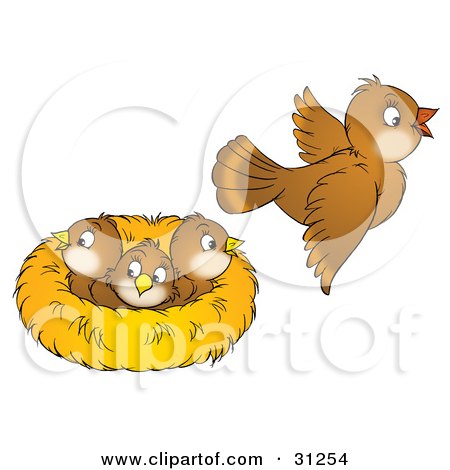
The picture I chose was of a baby bird leaving its nest for the first time in its life. Think of the itty bitty bird as Pip. The bird must leave its home in order to learn more about the world around it and grow up. Pip must also leave his family and village in order to become a gentleman. He has no idea what lies ahead in his journey, just as a baby bird is oblivious to the ways of the world. As both their knowledges increase they will grow and begin to thrive in various ways. For Pip his growth will lead to him becoming a gentleman and having "great expectations."
Friday, February 26, 2010
Great Expectations: The First Stage
"Pause you who read this, and think for a moment of the long chain of iron or gold, of thorns or flowers, that would never have bound you, but for the formation of the first link on one memorable day." In the quote Pip is referring to his first visit at Miss Havisham's. During his visit Estella says,"With this boy! Why, he is a common labouring-boy!"(60) and follows up later with, "He calls the knaves, Jacks, this boy!....and what coarse hands he has. And what thick boots!"(60) Once Estella says these things, Pip begins to change. He feels ashamed and embarrassed because he doesn't want to be low class and have people react/treat him how Estella had; he doesn't want people to patronize him. After this day Pip was more aware of social standings and how his actions affected that. He constantly worried of people, especially Miss Havisham and Estella, finding out of his "unclassy" behavior and messy job.
A day that began my "chain" was during the summer. Someone close to me, who cannot be named, was taken to the hospital after hurting herself from being unhappy. Once I heard what had happened it definately changed my outlook on life and the way I live. She let stress and unhappiness overpower her and she gave into it. After that day I decided that I never wanted to be in that situation so I changed. I began to think happier and try to not give into stress by doing things that would keep me happy and looking forward. I wasn't going to concentrate on my mistakes anymore; I didn't want to endure that much pain like she had. I also had to step up and become mature so I could watch over her and make sure she stayed balanced, emotionally, and not repeat what had happened.
Sunday, February 14, 2010
The Importance of Being Earnest Group Essay
Group Essay Thesis: In the play The Importance of Being Earnest Oscar Wilde uses dialogue to represent the individual styles of each relationship in order to convey the stereotypical relationships in the Victorian Era.
In my paragraph my main topic is Algernon and Cecily's relationship and how it is exaggerated and semi-fake. My first point is how Cecily fell in love with Algernon("Ernest") from hearing about him. In order to love someone you need to meet the person so you can get to know the real person. Plus by hearing about the person you may be told lies in order to make the person seem better and more suitable.
My second point is how Algernon Falls in love with Cecily mainly for her beauty and appearance. Beauty was important in the Victorian Era since a woman who isn't appealing to a man wouldn't be married off quite as easily as a woman who is very pretty. Also beauty can shield one's personality from people and by being "blind" a person might overlook and be oblivious to unpleasant personality traits.
My third and final point in my paragraph is how people, mainly women in this case, make up or fantasize of a relationship to make themselves feel wanted and needed. Like Cecily, women that live in the country don't have many eligible men to meet and flirt with, so they think of their ideal relationship. If they dream and imagine too much they may eventually convince themselves that their ideal made up relationship is reality.
In my paragraph my main topic is Algernon and Cecily's relationship and how it is exaggerated and semi-fake. My first point is how Cecily fell in love with Algernon("Ernest") from hearing about him. In order to love someone you need to meet the person so you can get to know the real person. Plus by hearing about the person you may be told lies in order to make the person seem better and more suitable.
My second point is how Algernon Falls in love with Cecily mainly for her beauty and appearance. Beauty was important in the Victorian Era since a woman who isn't appealing to a man wouldn't be married off quite as easily as a woman who is very pretty. Also beauty can shield one's personality from people and by being "blind" a person might overlook and be oblivious to unpleasant personality traits.
My third and final point in my paragraph is how people, mainly women in this case, make up or fantasize of a relationship to make themselves feel wanted and needed. Like Cecily, women that live in the country don't have many eligible men to meet and flirt with, so they think of their ideal relationship. If they dream and imagine too much they may eventually convince themselves that their ideal made up relationship is reality.
Tuesday, January 26, 2010
The Importance of Being Earnest/Victorian Research
My research on the Victorian Era has helped me understand the play The Importance of Being Earnest. The research made it so I understood social classes, education, and marriage. Many young girls did not go to school and instead learned daily housework skills for bettering their life as a housewife in their future, however in the play Cecily is taught school subjects such as German. She's not taught skills around the house; most likely since she is of higher class and people of higher class were more often taught lessons than those of lower class because they would have servants if they married into a rich family. Also marriage in the Victorian Era was more of a business deal or arranged rather than out of true feelings. As Lady Bracknell states, "When you do become engaged to someone,I, or your father, should his health permit him, will inform you of the fact.....It is hardly a matter that she could be allowed to arrange herself."(p. 23) Gwendolen and Jack ("Ernest") want to be married since they love each other, but they cannot since Jack/Ernest does not have a promising background, instead his background is unknown and seems to have originated in the lower class according to Lady Bracknell.
The different social classes do not generally socialize with one another other than for business. For example, Lane works as a servent for Algernon and doesn't talk to him other than what is necessary like telling of someone's arrival or bring something which he was asked to retrieve. Most of the time Lane just gives an acknowledging answer such as, "Yes sir," and "Name of person arriving." The middle class has more association with those of higher class such as Miss Prism and Dr. Chasuble who socialize with the Worthings, but still have business with them. In the higher class background is very important. If you come from a long line of well-known, important people or from a wealthy family than you're of high class, but if you're in the high class and your background is uncertain, like Jack's (John and "Ernest"), than people may not think quite as highly of you. Because of Jack's unknown background he was not eligible to marry Gwendolen. To be of high class you must come from high decent. The research on the Victorian Era greatly improved my knowledge of The Importance of Being Earnest and made me aware of and understand multiple social situations, circumstances, and restrictions of that era that are within the play.
The different social classes do not generally socialize with one another other than for business. For example, Lane works as a servent for Algernon and doesn't talk to him other than what is necessary like telling of someone's arrival or bring something which he was asked to retrieve. Most of the time Lane just gives an acknowledging answer such as, "Yes sir," and "Name of person arriving." The middle class has more association with those of higher class such as Miss Prism and Dr. Chasuble who socialize with the Worthings, but still have business with them. In the higher class background is very important. If you come from a long line of well-known, important people or from a wealthy family than you're of high class, but if you're in the high class and your background is uncertain, like Jack's (John and "Ernest"), than people may not think quite as highly of you. Because of Jack's unknown background he was not eligible to marry Gwendolen. To be of high class you must come from high decent. The research on the Victorian Era greatly improved my knowledge of The Importance of Being Earnest and made me aware of and understand multiple social situations, circumstances, and restrictions of that era that are within the play.
Wednesday, December 16, 2009
Animal Farm Poem: Revision of the Past
BANG
A gunshot dances
Across the October breeze
Bringing remembrance
of a battle unseen.
Dense fog surrounds
The unravelling dream
of animals charging
towards their enemy.
One pig up front
Scans the scene
Turns on his hooves
Exclaiming, "Long live humanity!"
Now aiding the enemy
He's marked a traitor
Receiving wounds in turn
For working with the instigator.
But the fog slowly rises
Revealing the truth
of the scene imagined
That persuaded
The brutes.
The pig in the front
Fought without harm
He never abandoned
The Animal Farm.
False words
Turned a nation
Against their own kin
Who knew a revision
Could cause such an end.
The past is the past
And should never be altered
Don't let a lie
Cause you to falter.
Friday, December 4, 2009
Poetry Out Loud Performances
The poem "Facing it" by Yusef Komunyakaa was recited by Brandan Emanual Wellington. Once the play button was pushed I was immediately drawn in by his confidence and voice. He added a haunting sorrow to the tone in his voice and it gives the listener goose bumps. Brandan's dramatization was remarkable. He was telling the audience the story and showing movements, actively involving the audience in the poem. Without a doubt, he clearly understood the meaning of the poem by his confident air and his voice. While Brandan recited the poem you saw the emotions expressed in his facial features and within his tone; it revealed the emotional meaning behind the poem. Part way through the poem I was ignorant to the fact that I was sitting at my house; I felt as if I were "in" the actions within the poem. By the end of the poem I longed to hear Brandan recite more peotry.
The meaning behind "Facing it" is not a pleasant, happy poem, as can be told by Brandan's voice that was, through out the recitation, sad and bone chilling. The poem simply told the truth behind war and the hardships of life; many sacrifices are made whether they are bad or good. The event most focused on was the Vietnam War. In fact, the author/speaker places us at the site of the Vietnam Memorial and describes the names scribed into the marble representing the many lost lives. At this time Brandan's voice had a ring of regret and longing to change what had happened. Many times throughout life you will regret the decisions you make, but you must live with them; that's the truth. You can't go back in time and change what has already been done; learn from what has happened.
The meaning behind "Facing it" is not a pleasant, happy poem, as can be told by Brandan's voice that was, through out the recitation, sad and bone chilling. The poem simply told the truth behind war and the hardships of life; many sacrifices are made whether they are bad or good. The event most focused on was the Vietnam War. In fact, the author/speaker places us at the site of the Vietnam Memorial and describes the names scribed into the marble representing the many lost lives. At this time Brandan's voice had a ring of regret and longing to change what had happened. Many times throughout life you will regret the decisions you make, but you must live with them; that's the truth. You can't go back in time and change what has already been done; learn from what has happened.
Subscribe to:
Posts (Atom)